
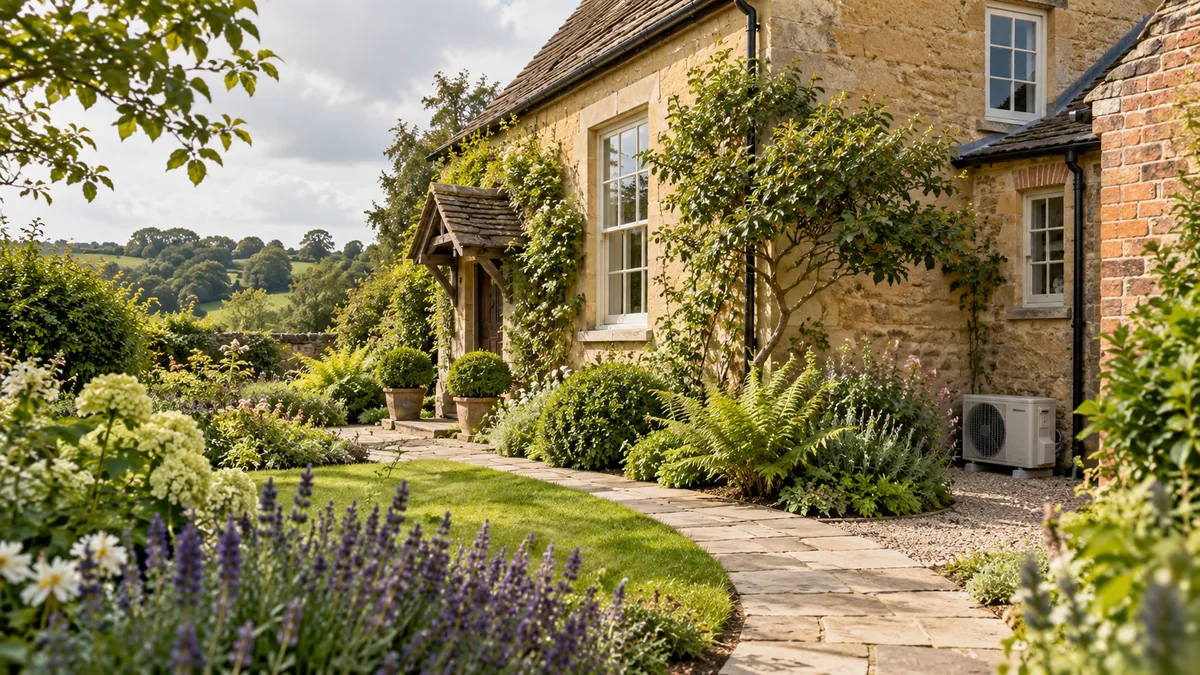
Most small home air-conditioning systems do not require a planning application. If you live in a standard house and can put the outdoor unit somewhere discreet, the process is usually simple.
However, your property’s location, where you place the unit, and whether it also provides heating can all make a difference. Contact your local council about your planned installation before you book any work, especially if you live in a flat or a protected building.
When is planning permission usually unnecessary?
For small home installations, you might not need permission if the outdoor unit does not materially change how your building looks from outside. In England, the UK government says this is often the case. However, there is no single rule for every situation, so check with your council about your specific plan.
Another option for certain air-source heat pumps is permitted development. If your system provides both heating and cooling and meets all the necessary conditions, you can install it without making a planning application. These conditions can cover size, position, noise and the number of outdoor units.
This difference is important. A cooling-only unit does not qualify for the heat-pump rule just because it looks like a heat pump. Still, not every cooling-only system needs planning permission. Check with your council to see if your planned work is considered development.
When should you check more closely?
Where you put the outdoor unit often matters most. A discreet position may be easier than a wall facing the street. Ask your installer to consider nearby windows, your neighbours, drainage and noise before choosing a location.
| Your situation | What to check |
|---|---|
| Small unit at a typical house | Check the proposed model and position against local rules. |
| Flat or maisonette | Check planning rules and any freeholder, building manager or landlord consent. |
| Listed building or protected area | Ask the council before agreeing to an external alteration. |
| Several units or a conspicuous position | Check applicable limits and discuss another position if needed. |
| Portable unit with a removable window kit | Check that the window is suitable and building rules allow its use. |
This table is a starting point, not a decision on whether your installation needs permission.
What are the rules in each UK nation?
The table provides a starting point for a domestic fixed installation, not a decision for your particular home.
| Nation | Key rule for heat pumps |
|---|---|
| England | A qualifying heat pump may be permitted development if it is not used solely for cooling and meets the other limits, including noise, size and location. |
| Wales | The updated rights cover qualifying heat pumps for heating or heating and cooling. They do not cover a unit designed only for cooling. |
| Scotland | The heat-pump right requires the unit to provide domestic heating or hot water. Check a proposed heating-and-cooling installation with the planning authority. |
| Northern Ireland | A qualifying heat pump must provide heat and meet conditions including noise and its position relative to a neighbour’s boundary. |
Rules about where you can put the unit, its size and how many you can have differ across the UK. Ask your installer to check the rules for your specific model and location, instead of relying on a general UK-wide guideline.
Local rules can sometimes remove permitted development rights. If you are not sure, ask your council for written advice.
What if you live in a flat or listed building?
You can still install air conditioning in a flat, but there are extra steps to check. In England, some heat pumps in wholly residential blocks of flats can qualify for permitted development if they meet the rules. You might also need permission from your freeholder or building manager to attach equipment to an outside wall. If you rent, get your landlord’s approval as well. A planning decision does not replace these other consents.
Listed buildings and conservation areas have extra rules. In England, the permitted development right for heat pumps does not apply within the grounds of a listed building, and there are limits in conservation areas. Other parts of the UK have their own rules. Changes to a listed building may also need separate listed-building consent.
If you cannot put the outdoor unit somewhere discreet, talk to your installer about other possible locations before you pay for a detailed survey.
If you rent or own a leasehold flat, our rented-home and flat guide covers the other consents to check.
Could a portable air conditioner be easier?
Yes. A good portable air conditioner can cool a single room without needing a fixed outdoor unit or pipes through the wall. This option is worth considering if you rent, cannot change your building’s exterior, or only need cooling during occasional hot weather.
A portable air conditioner is not completely plug-and-play. It needs an exhaust hose that leads outside, usually through a window kit. Make sure the kit fits your window and can be sealed properly. Portable units also take up floor space and are often louder near your bed than wall-mounted systems.
Using a removable window kit is different from making a permanent opening. If needed, check with your landlord or building manager. Also, compare noise and running costs before you decide.
See our portable-versus-split guide for costs and day-to-day differences.
Are there grants for air conditioning?
In England and Wales, the Boiler Upgrade Scheme offers £2,500 towards an eligible air-to-air heat pump. This grant is for replacing a heating system. The new system must meet your property’s full space-heating needs, and the complete heating arrangement must cover hot water. An installer certified by the Microgeneration Certification Scheme applies for you and shows the grant as a discount on the quote.
Adding a split system to cool one bedroom while keeping your existing heating is unlikely to qualify. The separate £7,500 grant for an air-to-water heat pump does not apply to a wall-mounted air-to-air system. Ofgem explains the eligibility rules.
Scotland’s Home Energy Scotland funding supports eligible heating projects; do not assume it will pay for a one-room cooling unit. The Boiler Upgrade Scheme does not cover Northern Ireland. Check its energy advice service for local schemes.
VAT is a separate matter. HMRC says that installing a qualifying, permanently fixed air-source heat pump can have 0% VAT until 31 March 2027. This rule does not include portable units. Ask your installer to show the correct VAT rate on your quote.
What should you check before installation?
Ask your installer to show you where the indoor and outdoor units will go, how the pipes will run, and how they will handle water and noise. If you need planning advice, give your council the model, size, planned location and photos.
Also check whether you need to meet building regulations or get permission from your landlord or freeholder. Anyone working on equipment containing F-gas must have the right qualifications. If you want to apply for a heating grant, discuss eligibility before you accept a quote.
Plan your cooling before asking for quotes
Start by deciding which rooms you want to cool. Sometimes, a smaller system in just one bedroom is enough, so you do not need to cool the whole house. Write down each room’s size, windows, sunlight and insulation, then choose between a fixed or portable unit.
CostToCool’s free Plan cooling for my home tool can estimate how much cooling your rooms might need and what the recommended setup could cost to run. It does not decide if you need planning permission or qualify for grants. Use the estimate to talk with an installer, and make sure you have all permissions before booking any work.