
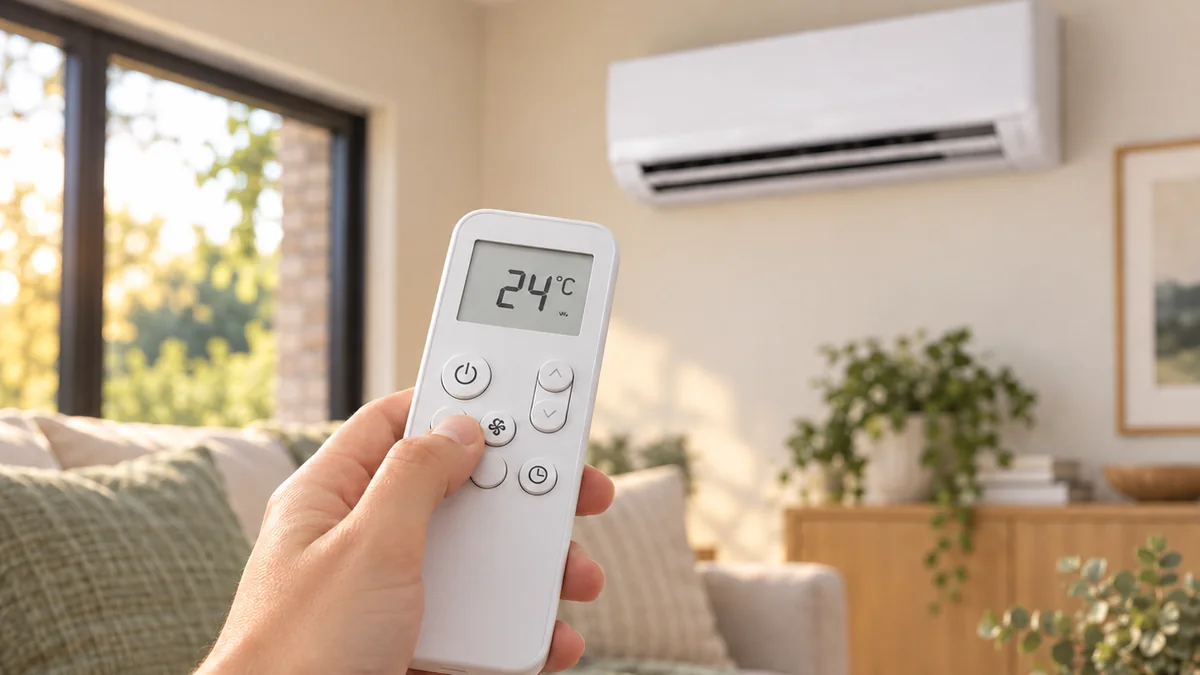
For most UK homes, start at 24°C. This temperature makes a hot room comfortable without cooling it more than you need.
If you’re still too warm, try lowering the setting to 23°C. If you prefer 25°C, that’s fine too. The ideal temperature depends on the room and the people in it.
Air-conditioning temperature guide
These are just starting points, not strict rules. Adjust the temperature for comfort and any health needs.
| Situation | Suggested starting point | What to consider |
|---|---|---|
| Living room during the day | 24–25°C | Lower it only if the room still feels too warm. |
| Bedroom before sleep | 23–24°C | Cool the room before bed, then try sleep mode or a higher setting. |
| Overnight | 24–25°C | Keep direct cold airflow away from the bed. |
| Very hot weather | Start at 24°C | Adjust for comfort, especially if someone is vulnerable to heat. |
| Empty room | Switch off or raise the setting | Avoid cooling rooms nobody is using. |
Why start at 24°C?
No single thermostat setting works for every home, but 24°C is a good place to start if you’re unsure.
Use this as a reference, not a strict rule. Set your air conditioner to 24°C and let the room cool down. If you’re still too warm, try 23°C. If 24°C feels too cold, try 25°C. Higher settings usually use less energy, but your savings depend on the weather, your room and your unit.
Does a lower setting cool the room faster?
Usually, it doesn’t. Setting the thermostat to 18°C instead of 24°C changes the target temperature. The air conditioner will still cool the room either way.
If you set the temperature too low, the unit might keep running after you’re already comfortable. This can make the room too cold and use more electricity than you planned.
Choose the temperature you want and let the air conditioner reach it. Some models have rapid-cooling or fan-speed options, so check your manual if you want to use them. The US Department of Energy also advises against setting the air conditioner too low in the hope of cooling faster.
What temperature should you use during a heatwave?
Start with 24°C if it feels comfortable, but always put health first. Older adults, young children, pregnant women and people with health conditions are more at risk from heat.
UK Health Security Agency guidance for health and social care settings recommends a cool area that can stay below 26°C for vulnerable people. That is not a universal thermostat rule for homes. However, it shows why a reliably cool room matters for people at greater risk. See the UKHSA guidance for social care managers.
Focus on how people feel, not just the thermostat. If anyone feels unwell, follow NHS advice on heat exhaustion and heatstroke rather than worrying about saving electricity.
What is the best temperature for sleeping?
Set the bedroom to 23°C or 24°C for comfort. Then see if a higher setting, sleep mode or a timer keeps you comfortable through the night.
Sleep mode usually changes the temperature or fan speed gradually, but how it works depends on your model. Check your manual, and if a cold draught bothers you, direct the airflow away from the bed.
Bedrooms on the top floor or in the loft can stay hot because the roof and walls release heat after sunset. To help, shade the windows during the day and cool the room before bed. You may need a different temperature at night than in your living room.
Our bedroom air-conditioning guide covers overnight cost, noise and airflow too.
Why can the same temperature feel different?
Temperature is only one part of staying comfortable. Humidity, air movement, sunlight, clothing and activity all affect how warm you feel. The Health and Safety Executive also explains this when talking about comfort at work.
For example, a humid room can feel warmer because sweat doesn’t evaporate as easily. Air conditioners can remove some moisture while cooling, so 24°C may feel more comfortable after the unit has been running for a while. Gentle airflow can also help, even without lowering the temperature.
The air conditioner’s thermostat might show a different temperature than a thermometer near your sofa or bed. If the display says 24°C but you still feel too warm, check the temperature where you actually sit or sleep before changing the setting.
How can you stay comfortable without lowering it?
- Shade sunny windows before the room heats up.
- Close windows and outside doors while the air conditioner runs.
- Close doors to rooms you are not trying to cool.
- Use the fan setting to spread cool air through the room.
- Clean filters as the manufacturer recommends.
- Turn off unnecessary lights and appliances that give off heat.
- Cool the rooms people are using, rather than every room.
The NHS recommends closing windows, curtains and blinds to keep daytime heat out, then opening windows when the air outside cools down. If you are running air conditioning, close the windows while it cools and ventilate when you switch it off.
For shading and ventilation in hot weather, see our home heatwave guide.
Estimate the cost for your home
Changing the setting from 25°C to 24°C or 23°C can affect the cost, but no single savings figure fits every room. The weather, your insulation, your unit and how long it runs all make a difference.
If you already have air conditioning, try CostToCool’s free Calculate my current setup tool. Enter your room, system, schedule and chosen setting to get a personalised estimate of your running costs.
If you haven’t bought a system yet, use the free Plan cooling for my home tool. It estimates how much cooling each area needs and what a recommended setup might cost to run. Both results are estimates, but they give you a better starting point than a single national average.