
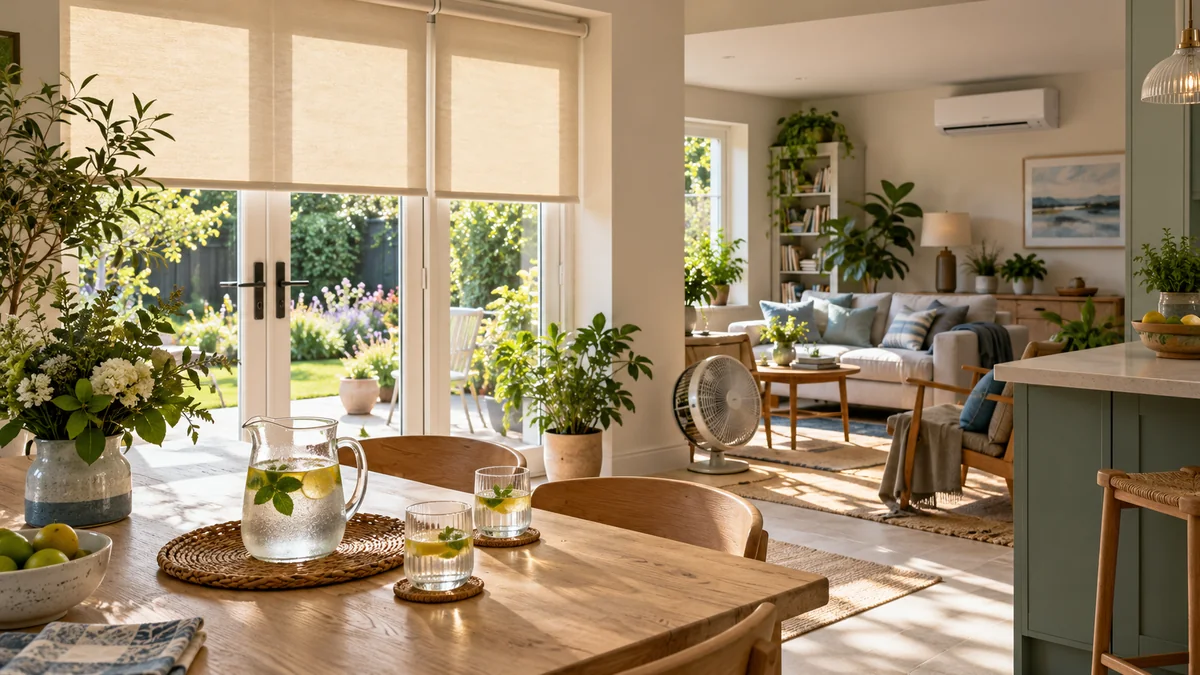
The best way to keep your home cool during a heatwave is to prevent it from heating up. Shade sunny windows, keep hot outdoor air out, and let cooler air in when the temperature drops. A fan can help you feel cooler, and air conditioning can lower the temperature in rooms that still get too hot.
Start with the room where you spend the hottest hours or sleep.
A simple heatwave plan for your home
What you need to do will change as the day gets warmer or cooler.
| When | What to do | Why it helps |
|---|---|---|
| Before the sun reaches a window | Close its blinds or curtains; use outside shade if you have it. | Stops some solar heat entering. |
| When it is hotter outside | Keep sun-facing windows shut and reduce heat from cooking and appliances. | Keeps warmer air and extra heat out. |
| When it is cooler outside | Open windows where safe and try to create airflow. | Replaces warm indoor air with cooler air. |
| Before bed | Check the bedroom; use the coolest suitable room if needed. | Sleeping rooms can stay hot after sunset. |
| If the room remains too hot | Use effective cooling or spend time somewhere cooler. | Comfort and safety come first. |
How well each step works will depend on your home and the weather.
How do you keep heat out during the day?
Close blinds or curtains before strong sunlight enters a room. Focus on large or unshaded windows. Outdoor shutters, awnings, or other exterior shades can help keep sunlight from reaching the glass. The UK Health Security Agency (UKHSA) home checklist recommends using both indoor and outdoor shading.
Reduce heat inside your home as well. Turn off lights and equipment you are not using, and try to prepare meals that need less cooking during the hottest part of the day. Check that your heating has not turned on automatically.
A top-floor flat, a room with large sunny windows, or a home with limited airflow may still get too hot even if you follow these steps.
When should you open the windows?
Try this simple test: if the air outside feels cooler than inside, open windows where it is safe to do so. Opening windows on different sides of your home can help air move through.
If the air outside is hotter, opening a window can make a cooler room warmer. Close the window again and shade any window that gets sunlight. In the evening and early morning, check if the outdoor air has cooled enough to let fresh air in. The Met Office also recommends this approach.
Do not leave windows open if doing so would put anyone at risk.
What helps if you do not have air conditioning?
A fan moves air across your skin and can help you feel cooler, but it does not actually lower the room temperature. The NHS says fans are helpful when the air temperature is below 35°C. If a room gets extremely hot, do not rely only on a fan to keep someone safe.
If possible, move to a cooler, shaded room. Drink water often, wear light clothing, and use cool water on your skin.
An evaporative air cooler is not the same as an air conditioner. It cools the air nearby by evaporating water and adds moisture, so it needs good ventilation. It is not a replacement for air conditioning in a room that stays hot. The Energy Saving Trust explains the differences between fans, evaporative coolers, and portable air conditioners.
Our fan-versus-air-conditioner guide compares costs and explains when a fan may no longer be enough.
How should you use air conditioning in a heatwave?
If you have air conditioning, use it to cool the room that needs it most instead of trying to cool your whole home with one unit. Keep windows closed while it is running and close doors to rooms you are not cooling. Also, keep blinds closed on sunny windows so the system has less heat to deal with.
For a portable air conditioner, make sure the exhaust hose is fitted securely at the window and seal any gaps around the window kit. If not, warm air can get in while the unit is running.
Set the air conditioner to a comfortable temperature and allow the room time to cool down. Setting the thermostat much lower than needed can make the AC run longer. We have separate guides that explain thermostat settings and running costs in more detail.
For the thermostat and electricity figures, see our temperature guide and running-cost guide.
What if your bedroom stays hot at night?
A hot bedroom can make a heatwave feel even worse. Shade your bedroom during the day, and in the evening, check if the outside air is cooler before opening the windows. If you have another room that stays cooler and is suitable for sleeping, try using it for a few nights.
Top-floor and loft rooms can stay warm even after sunset. In these cases, a fan might help you feel more comfortable, but it will not remove the heat trapped in the room. If you have air conditioning, cooling your bedroom before bed can help more than cooling an empty living room all evening.
Check the temperature where people at greater risk spend time and sleep, as the NHS recommends.
When is a hot home a health concern?
Do not rely only on the outdoor forecast. Pay attention to how hot your home feels, whether people can cool down, and if anyone seems unwell. Older adults, young children, pregnant women, and people with certain health conditions may need extra care. The UKHSA home checklist suggests going to a cooler public place, like a library, if your home stays too hot and it is safe to travel.
Dizziness, headache, nausea, and heavy sweating can be signs of heat exhaustion. Move the person to a cooler place and follow NHS advice on heat exhaustion and heatstroke. Call 999 if you see signs of heatstroke, like confusion, seizures, or loss of consciousness, or if the person is still unwell after 30 minutes of cooling.
Make a plan for the next hot spell
Pay attention to which rooms get hot first and which stay warm overnight. If sunlight comes through a window, add more shade. If your home cools down slowly, plan when and how to ventilate safely. For ongoing overheating, think about long-term solutions like better shading, ventilation, or cooling.
If you already use air conditioning, CostToCool’s free Calculate my current setup tool can estimate running costs for your room and schedule. If you are thinking about getting a system, the free Plan cooling for my home tool can estimate the capacity your rooms might need and what it could cost to run. Both tools give estimates, not a guarantee of a specific indoor temperature.