
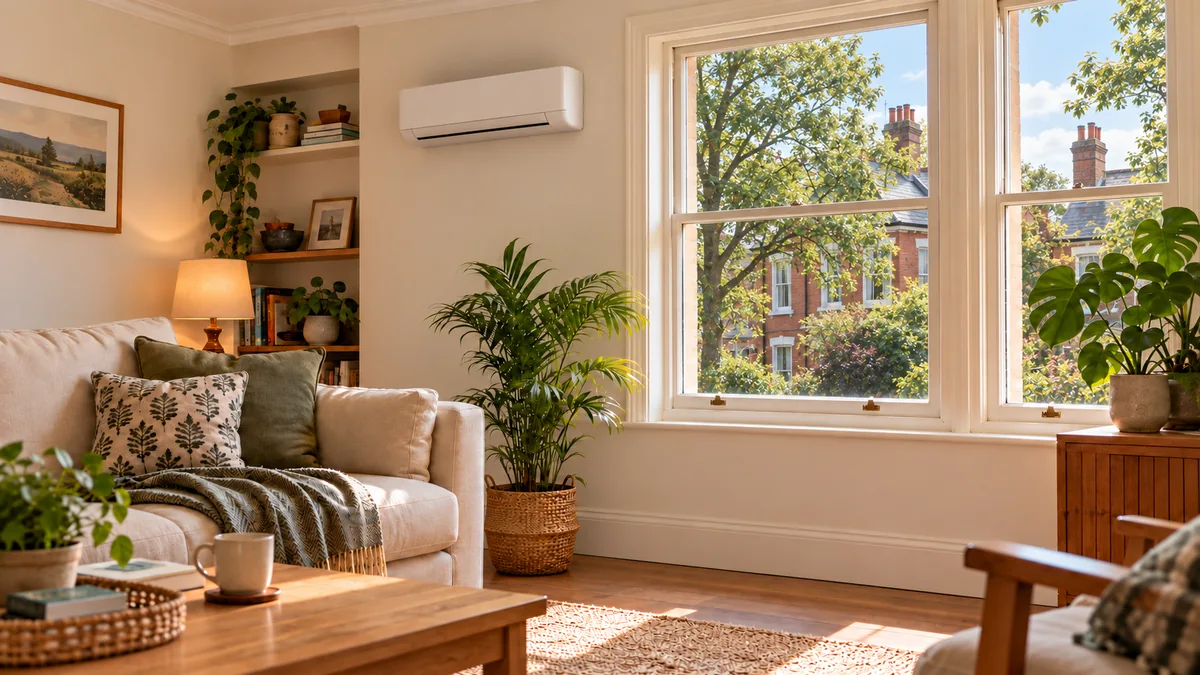
You might be able to install air conditioning in a rented home or flat, but you should always get approval before adding a permanent system. Wall-mounted split units change the property and usually need an outdoor unit. Your landlord, freeholder or building manager may need to approve the work, even if you do not need planning permission.
If you cannot install a fixed system, a portable air conditioner can cool one room without drilling through an outside wall.
What permission do you need?
The permissions you need depend on whether you rent, own a leasehold flat or own a house. They also depend on the type of system you want to install.
| Your situation | Check before installing a fixed split system |
|---|---|
| Rent a house | Ask the landlord for written permission and check any planning requirements. |
| Rent a flat | Ask the landlord; the freeholder or building manager may also need to approve external work. |
| Own a leasehold flat | Read your lease and ask who can approve alterations to external walls or shared areas. |
| Own a house | Check whether planning rules apply to the proposed outdoor unit and its position. |
| Use a portable unit | Check the window, tenancy or building rules if the kit affects them; avoid permanent changes without consent. |
These approvals are separate. Getting your landlord’s permission does not replace planning permission if you need it. Equally, being exempt from planning does not mean you can change someone else’s property without consent.
Can you fit a split system in a rented home?
You can ask for permission. Some landlords may like a system that offers both cooling and heating, especially if the property gets too hot. But installing a split system usually means mounting units, drilling for pipes, setting up drainage and connecting electricity. Check your tenancy agreement and get written permission before hiring an installer or making changes.
Decide who will own the equipment, pay for installation and take care of servicing and repairs. Agree on what happens when you move out, too. Will the unit stay, or will you need to remove it and repair the wall? Some tenants pay for installation and leave the unit in place; others negotiate a different arrangement with their landlord. Settle these details before you order anything.
Do not try to install a refrigerant system yourself, even if your landlord agrees. Anyone working on equipment containing F-gas needs the appropriate qualifications.
What if you own a flat?
If you own a flat, you might not own the outside walls. Many leases set out what you can attach to the building and which changes you can make inside. The freeholder or management company may also have rules about noise, appearance, shared spaces and maintenance access.
The Leasehold Advisory Service explains that your lease may require written consent for alterations, even if you already have planning or building regulations approval. Check your lease before getting quotes. Provide the person responsible for consent with the proposed layout, outdoor unit size and noise details.
If the building is listed or in a conservation area, consult the local council about your plans before proceeding.
Do you need planning permission too?
In England, some heat pumps in fully residential blocks of flats may count as permitted development if they meet all the rules. Conditions can cover the outdoor unit’s size, position, noise and use. Cooling-only units do not automatically qualify. Other parts of the UK have different rules.
Our planning-permission guide explains the practical checks. Ask your council about your specific model and proposed position instead of assuming every flat needs an application or every small unit is exempt.
Planning permission is only one consideration. You may still need consent from the freeholder or landlord even if the council does not require a planning application.
Is a portable air conditioner easier?
Usually, yes. A portable unit does not need a fixed outdoor unit or pipes through the wall. You can take it with you when you move, which is handy for renters. However, it must vent hot air outside through an exhaust hose, usually with a window kit.
Check your window before buying. A kit designed for a sliding window may not fit a UK casement window without an adapter. Seal the opening as well as you can, and avoid drilling or changing a window frame without approval. If a listed building or management rules restrict even temporary fittings, ask first.
A portable unit takes up floor space and its compressor runs indoors. If you want to cool a bedroom, see our portable versus split bedroom-noise guide for help comparing noise levels.
Our portable-versus-split comparison covers running costs and everyday trade-offs.
What if your home keeps overheating?
Tell your landlord which rooms get too hot, when it happens and what you have already tried. Photos of unshaded windows or records of indoor temperatures can help show the problem. Ask whether they can improve blinds, add shading, improve ventilation or approve a cooling system.
The UK Health Security Agency’s home checklist suggests using shading and opening windows when it is cooler outside, if it is safe. If someone in your home is vulnerable to heat, make sure your landlord knows. Do not assume your landlord must install air conditioning simply because a room is warm. If you think the property poses a serious health risk, seek housing advice.
How should you ask for approval?
Make the decision easier by giving clear information. Explain which room needs cooling, why you chose a fixed or portable option and where the equipment would go. For a split system, include the installer’s proposed pipe and drainage routes, outdoor noise details and who will pay for installation and maintenance.
Confirm who will handle servicing and what happens to the system when you move out. If you live in a flat, ask who will arrange the freeholder’s consent and whether the building has other air-conditioning installations. Get the necessary approvals before paying a deposit.
Choose a setup for your home
Start by measuring the rooms you want to cool. Note how much sunlight they get, how well they are insulated and how often you would use air conditioning. This will help you choose a suitable system instead of simply buying a bigger unit.
If you are planning to buy, CostToCool’s free Plan cooling for my home tool can estimate the capacity you need and what a recommended setup might cost to run. If you already have a portable or fixed unit, the free Calculate my current setup tool can estimate running costs for your schedule. Both give estimates; neither grants permission to install a system. Make sure you have the right consents for your home.